I rebuild and grow service businesses.
I help service-business owners bring in customers, simplify operations and put AI to work. I work alongside you and your team to understand the business, connect the tools and build systems that make it easier to run.
Your business shouldn’t depend on you remembering everything.
For service-business owners juggling customers, employees and tools that don’t work together.
We find where work gets stuck, choose what’s worth fixing, and put the right processes and tools to work with your team. That might be a focused improvement or a deeper operational rebuild.
Based in Twin Falls. Serving Southern Idaho, with remote projects available.
What I built while running a service business.
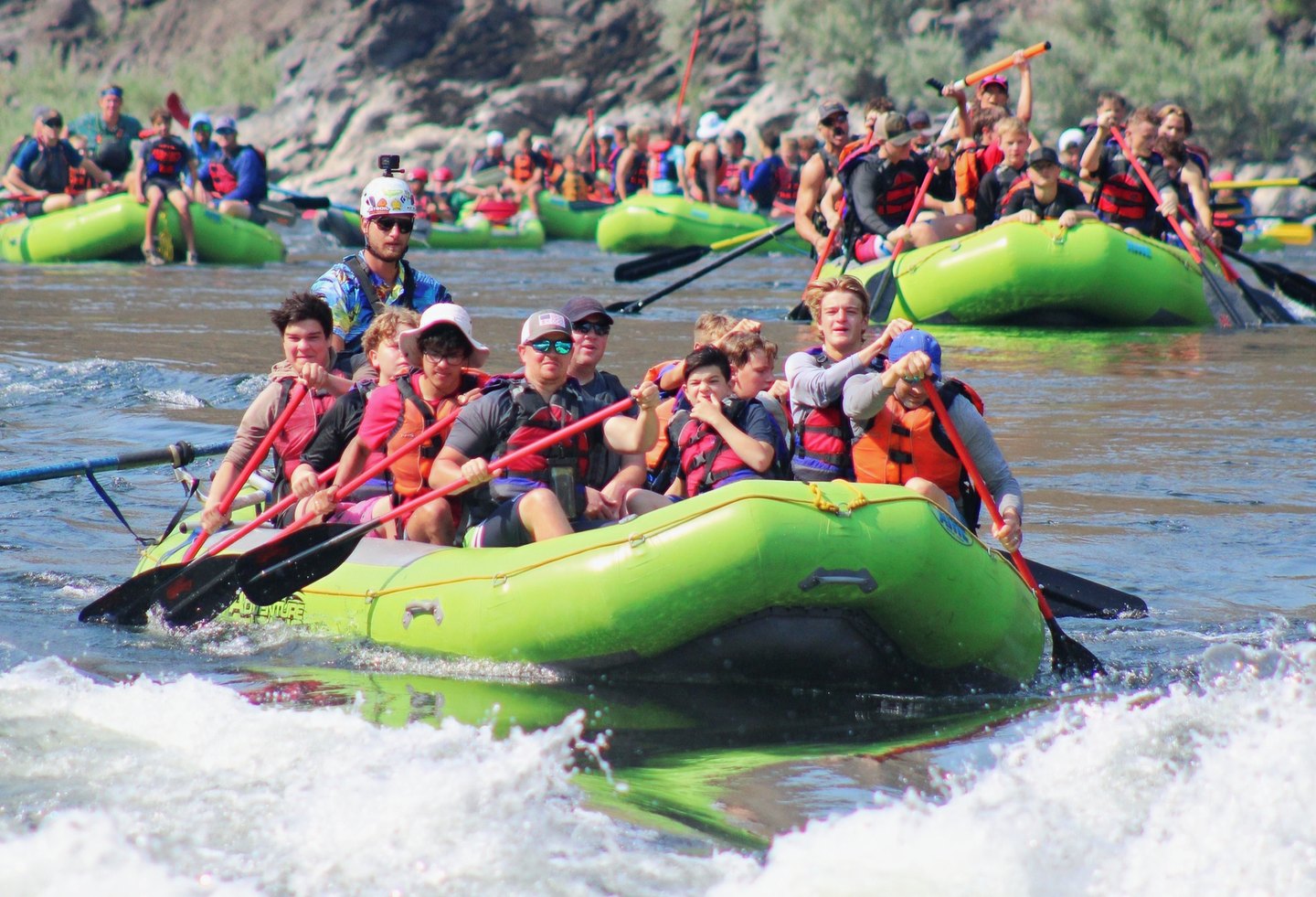
As General Manager at Adventure Idaho, I lead a team with 44 seasonal staff at peak. Product, people, content, reputation and marketing all contributed to customer growth.
- 3.6×customer growth
- Nearly 20×website traffic
- 20–40 → 2–4 hrsweekly planning, estimated
- 6505.0★ Adventure Idaho Google reviews, Riggins
Sources and estimates
These figures describe Adventure Idaho’s operation, website and Riggins review listing.
- Customers: 1,279 in 2022 → 4,709+ in the 2026 season so far.
- Web analytics: 4,944 → 97,486 annual unique visitors; 2022 vs. Oct. 10, 2025–Oct. 9, 2026.
- Weekly planning: estimated 20–40 hours → 2–4 hours.
- Reviews: 5.0★ across 650 Google reviews for Adventure Idaho’s Riggins listing.
- Revenue and other financial figures are kept private at the company’s request.
The crew board is one part of the system I built to run the business, with phone and web tools that keep employees, customers, vehicles and daily work connected.
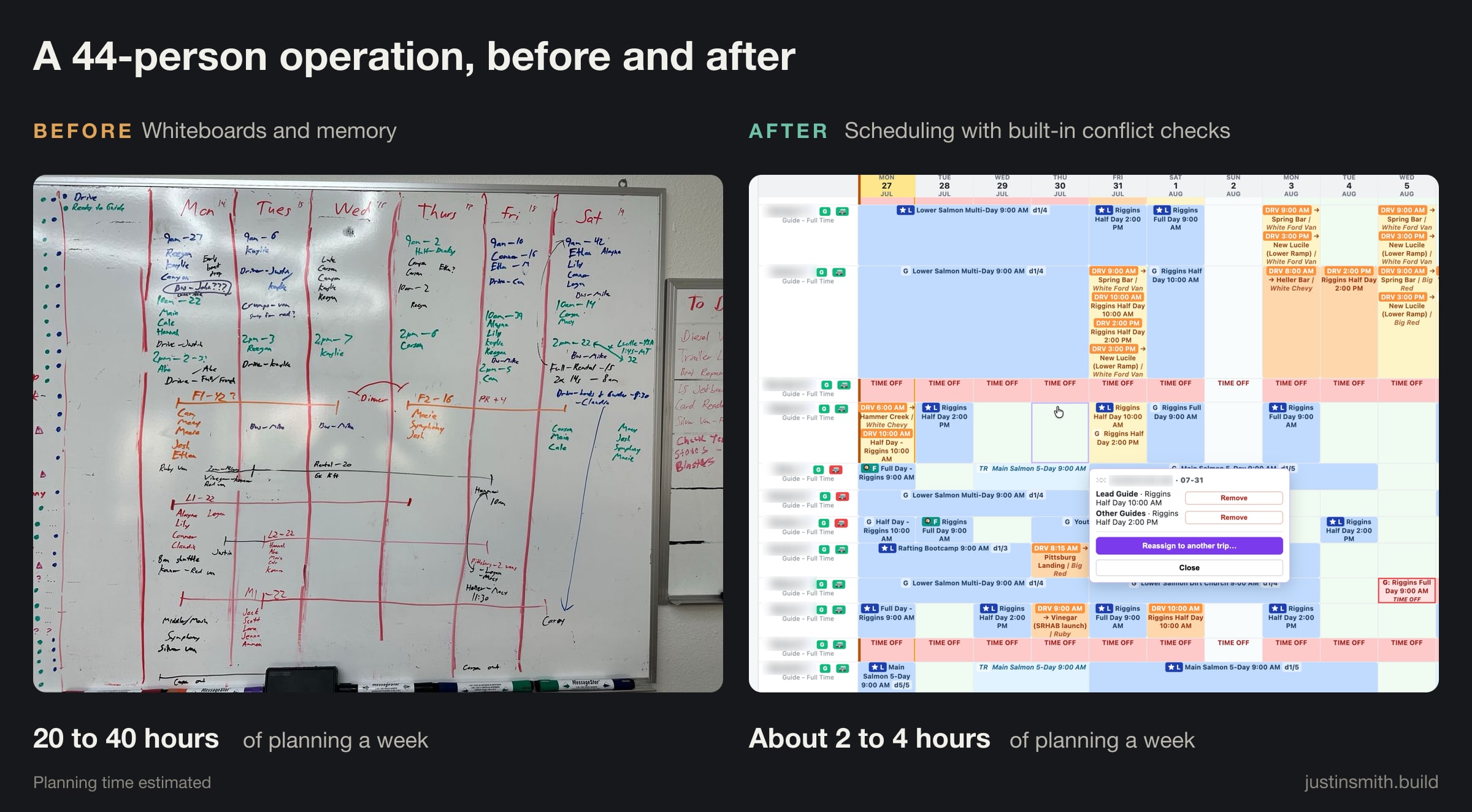
- Staffing Colored assignments show each person's trips or time off.
- Vehicles Driving assignments show the vehicle and pickup point.
- Conflict checks The red outline flags a conflict for a person to review.
See what else it runs
- Scheduling: employees, vehicles and equipment checked together
- Qualifications: credentials, job requirements and expiration dates
- Payroll preparation: checking work records before payroll
- Maintenance and follow-through: vehicle issues, assigned tasks and outstanding repairs
- Communication: field updates, reminders and operational alerts
- Supplies: menus, inventory and shopping lists
What putting AI to work can look like
Connect the message or record to the rules behind the work, then keep a person in charge.
A schedule change becomes a checked replacement plan.
A tested workflow flags a crew change, checks who can cover, drafts a request for approval and waits for a replacement to confirm before the schedule changes.
Scattered inquiries become a prioritized follow-up list.
A live sweep surfaces missed calls, texts and emails. A person reviews the context and chooses what to answer first. Recovered revenue has not been measured.
A spoken problem becomes a fix ready for review.
At a gas station, I described a shuttle-seat conflict out loud on my phone. Claude Code traced the scheduling logic, restored missing conflict checks and staged the fix. The decision to ship remained mine; one confirmation was still needed before deployment. Read the gas-station story →
One change. Everything it touches.
Here’s how an employee absence moves through my crew-coverage workflow at Adventure Idaho.
- Tell it what changedSay it on a phone or send a team message: an employee can't cover an assignment.
- Check the people, resources and rulesMatch the work to customer commitments, available employees, vehicles and equipment. Check qualifications, timing, capacity and other assignments before proposing coverage.
- Review and apply the updateA manager reviews the proposed coverage, the replacement confirms and the manager approves. Only then do our schedule and team tools update. Human approval stays with money, compliance and safety.
Approved staffing changes update our own schedule and team tools. External booking data remains read-only; I’m working with providers on approved write-back where it is needed. What booking software needs to support.
The hard part is deciding what the system should know, what it should do, and where a person stays involved.
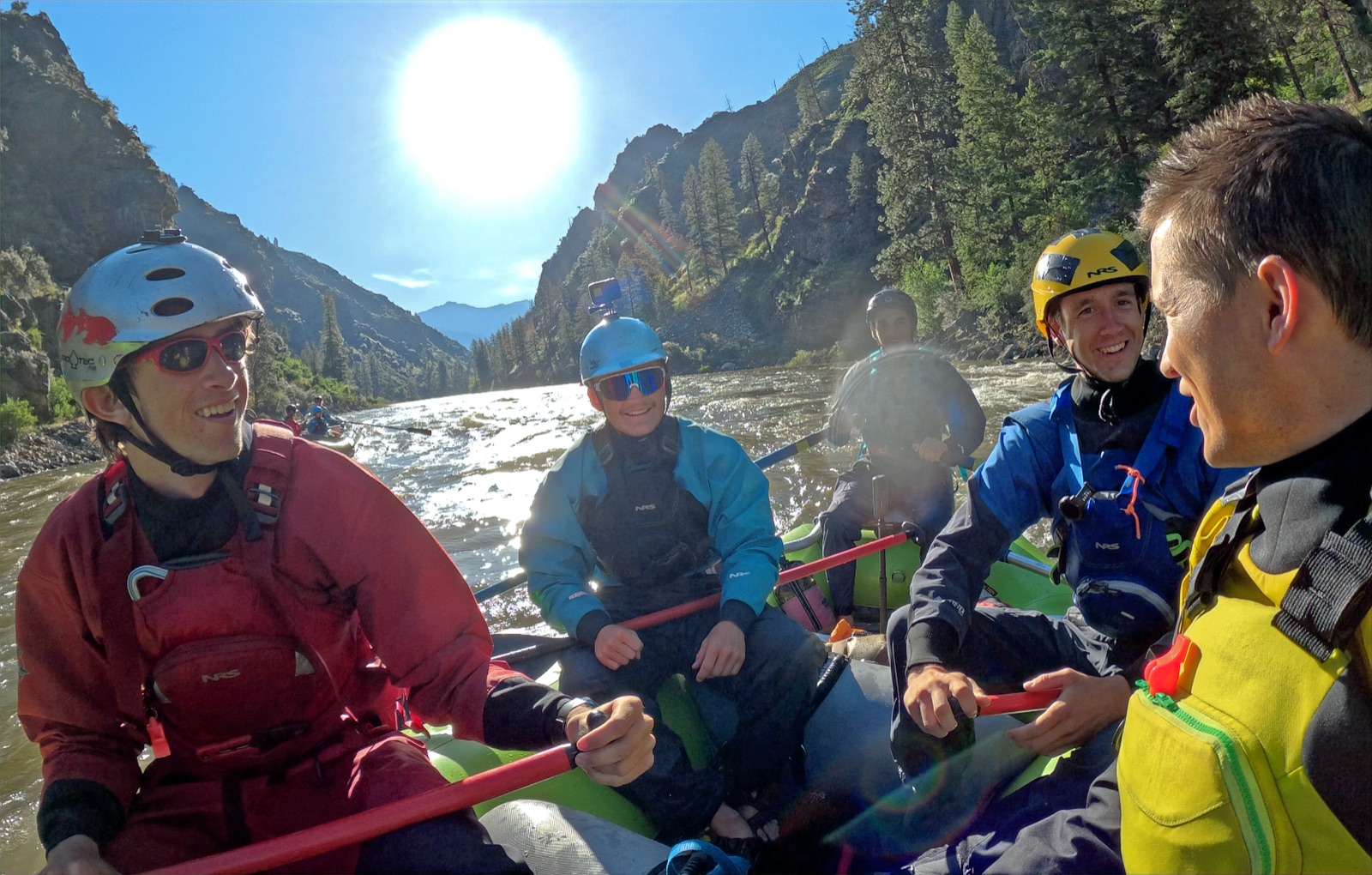
Training river guides is one of the most rewarding parts of my work. I’ve trained more than 100 through hands-on instruction, bootcamps and honest debriefs.
It’s taught me the importance of culture: helping people speak up, learn from mistakes and make good decisions when no one is standing over them.
The order matters
- The product. Make it the same every time, delivered by people who are not you.
- The people. Training, standards and debriefs, so quality holds while the volume grows.
- Demand. Get found, get trusted, get chosen.
- Pricing. Raise it once demand has proved the product is worth it.
- The operating system. The process and the software underneath it, so growth stops running through one person's memory.
Most of the damage I see comes from doing these out of order. A demand engine pointed at an inconsistent product just manufactures bad reviews.
What I built
- Half the revenue base gone in FebruaryA policy change took the largest account. Records by May.
- The architectureThe operating platformOne database the whole crew runs from. Assignments made from a phone, updates in a sentence, and every change checked against everything else.
- The demand engineFrom invisible to highest rated in the market. Content and reputation built the foundation; paid marketing now helps scale demand.
- The sensor layerBookings, forms, radios and crew messages, read and reconciled against the live operation.
- Building a training program from nothingThe standards and debrief culture that held quality steady while the company tripled.
What I have figured out
- Start here: the whiteboard storyWhat it took to get off the whiteboardLate nights at the whiteboard, long dispatch messages, and the database that made our rafting operation easier to run.
- Build it centralized. Run it distributed.Why the system that replaced our whiteboard got built in weeks, and the three phases I'd use inside any service business.
- Everything is connected except the booking softwareWe run on our own system with AI on top. What we need from booking software, and why it's bigger than one outfitter.
- I was the APIFor a few seasons most questions in the operation routed through me. What it cost, and how it stopped.
- Selling through machines to peopleMachines now decide who gets considered. What they read, and soon act on, is the operation underneath.
- From about 30 to about 1,800 AI search appearances a monthThe lever wasn't more content. It was an operation worth describing.
- The expensive part was never the softwareWhy custom operating software never reached small businesses, and what changed.
- We stopped hiring for experience and started hiring for trajectorySeasonal crews in a town nobody commutes to. What we changed and what it cost to learn.
Right now
- The research. Working out where a business's unwritten rules actually live, so an install starts from evidence instead of interviews.
Know an owner who’s carrying too much of the business in their head?
When every question, schedule change and customer follow-up comes back to one person, there’s often a better way to work. If someone comes to mind, I’d appreciate an introduction.
Make an introduction