From invisible to #1 rated
When I started, the company was effectively invisible online. Bookings came in by phone. There was a website, but it wasn't a funnel, it was a brochure.
- Nearly 20× website visitors, 4,944 in 2022 to 97,486 in the last 12 months
- ~1,800 AI search appearances a month, from ~30
- 3.6M+ organic video views
- 5.0★ across 650 Google reviews
The product came first
This is the step people skip. Before any of the demand work, the product itself was inconsistent: no checklists, no standardized guide training, no shared definition of what a trip was supposed to be. Driving traffic at that would have produced a pile of three-star reviews and a worse business.
So the first work was operational: checklists, a real training program, and a standard you could hold people to. That system is written up publicly on the company site, under how we run rafting trips. The 5.0-star average across 650 Google reviews is the number that tells you it held. Reputation is a demand channel, and it's the only one competitors can't buy their way into.
Deciding what we stood for
Almost every rafting company says the same thing: fun, scenery, a great day on the river. It's true of all of them, which is exactly why it sells none of them.
So we didn't lead with fun. We led with what a parent actually worries about before putting their kids in a raft, and what the systems summarizing our category already know goes wrong in it: safety, how the guides are trained, and whether the trip will be the same good trip whoever happens to be guiding it. Then we made each of those specific enough to check. "Guides train far beyond state requirements" is a claim. The training page is the evidence behind it, and it only works because the training is real.
That's most of the method. Find what customers are nervous about, make it genuinely true, then say it plainly and specifically enough that a person, or a machine, can believe it.
Content as the acquisition channel
In the early seasons, before we added paid marketing, the strategy was volume and craft: shooting and editing our own photo and video, writing our own articles, and publishing constantly. The organic video library is past 3.6M+ views, with 8 reels over a hundred thousand and one of those past 1.6 million. The spread matters more than the outlier does: one viral hit is luck, and a shelf of them is a process.
Content and reputation built the base. Paid social now scales it, and it only works because there's something worth pointing it at. Website visitors went from 4,944 in 2022 to 97,486 in the last 12 months. The number I watch closest is direct visits, people typing our name in on purpose, up about ten times over the same stretch. You can buy a click. You can't buy someone looking for you by name.
The demand also moved online, where it costs less to serve. Online bookings went from 67% of the total in 2023 to 78% in 2025, and from 46% to 74% of revenue.
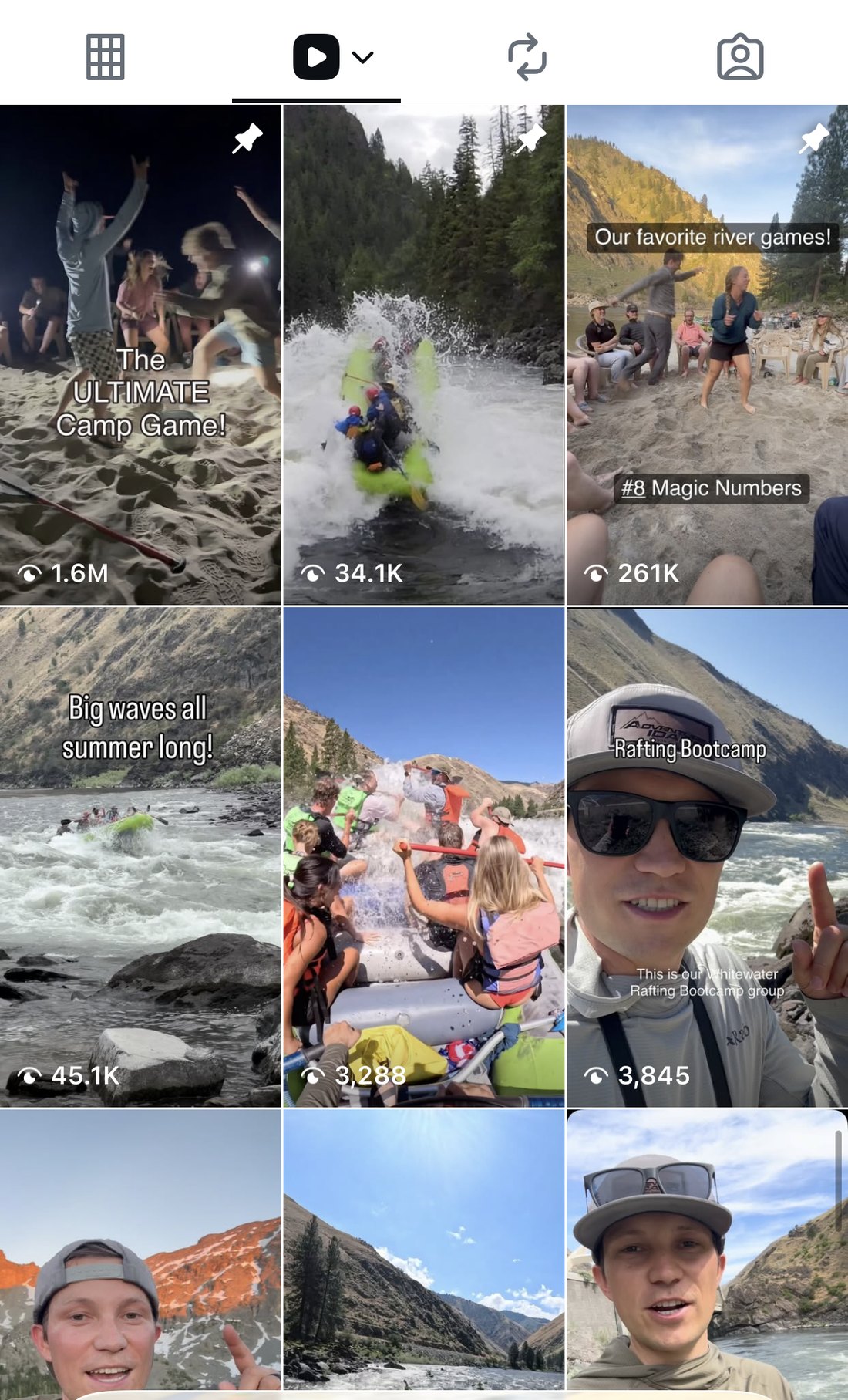
The lesson that transfers: in a visually rich category, the founder or operator with a camera and a point of view will out-perform an agency retainer, because the content that travels is specific and slightly weird, and agencies are structurally incapable of making it.
Search, then AI search
Conventional SEO did the early work: structure, content depth, and pages built around what people were actually searching rather than what we wanted to say.
Then the channel started changing. A growing share of buying research now happens inside assistants that summarize rather than link, which means the question stops being "do we rank" and becomes "does the model know we exist, and does it describe us correctly." Those need different things: crawlable text rather than JavaScript-rendered pages, clear factual statements a model can lift, structured data, and content that answers questions directly instead of burying the answer under narrative.
It worked. Appearances in AI-generated answers went from ~30 a month to ~1,800, with no extra ad spend. The lever wasn't more content. It was an operation worth describing, described plainly. More on that here.
Most competitors in most categories haven't noticed yet. That's the opening.
Then price for the demand
Demand without pricing discipline is just more work at the same margin. Once bookings were flowing through software rather than the phone, pricing became a lever instead of a guess. Rates went up and volume kept climbing, which is the clearest possible evidence a product was underpriced rather than overpriced.
When it had to work
The real test came in February. A policy change took our largest institutional account from ~50% of revenue to under 20%, in a low water year. The demand engine was the only lever big enough to answer that. We rebuilt demand between February and May and broke every record the company had before the season opened. The full story.
Read the work
Claims about writing are cheap, so here are some of the pieces I've written for the company site. Judge them yourself.
- Our approach to rafting tripsThe operation, explained for the person deciding whether to trust it.
- What most rafting companies get wrongThe differentiation, argued from the customer's side of the table.
- Okay, but what kind of Class IV?River expertise, in plain language.
- Don't trust the headline snowpack numberA contrarian read on the drought headlines customers were booking off.
- The gear we require our guides to carryStandards as marketing: the safety bar, made specific enough to check.
- The raft that tried to escapeBecause a river company should be able to tell a story.